
English 
Views: 0 Author: Site Editor Publish Time: 2026-09-30 Origin: Site


Selecting the right display illumination fundamentally changes how users interact with your hardware. This critical engineering and procurement decision directly impacts product lifespan. It influences overall user experience and heavily dictates strict power budgets. We often see the high cost of failure in rushed display designs. Incorrect specification leads to accelerated component degradation. You might face cascading thermal management failures. Displays can suffer from poor readability in demanding target environments. Engineers must get this right early to avoid costly downstream product recalls. We created this comprehensive guide to help you navigate these complex hardware choices. We provide technical decision-makers a structured framework to evaluate different display architectures. You will learn to balance core electrical and optical specifications effectively. We also show how to mitigate critical risks before you authorize mass production. Read on to master the parameters defining modern displays and safeguard your next product launch.
Balancing brightness and color accuracy requires precise current regulation; pushing components to maximum ratings reduces Mean Time Between Failures (MTBF).
Structural choice (edge-lit vs. direct-lit) establishes the baseline for your device’s thickness, contrast uniformity, and bill of materials (BOM) cost.
Industrial environments demand specific thermal and voltage tolerances that standard commercial backlights cannot sustain.
Partnering with an experienced LCD backlight manufacturer early in the design phase prevents costly late-stage PCB layout revisions.
Determine the physical constraints of your hardware early in the design phase. You must also establish strict visual uniformity requirements before component selection begins. Designers often face a definitive choice between two primary illumination architectures. These structural choices dictate fundamental device characteristics. They influence chassis design, power consumption, and thermal routing.
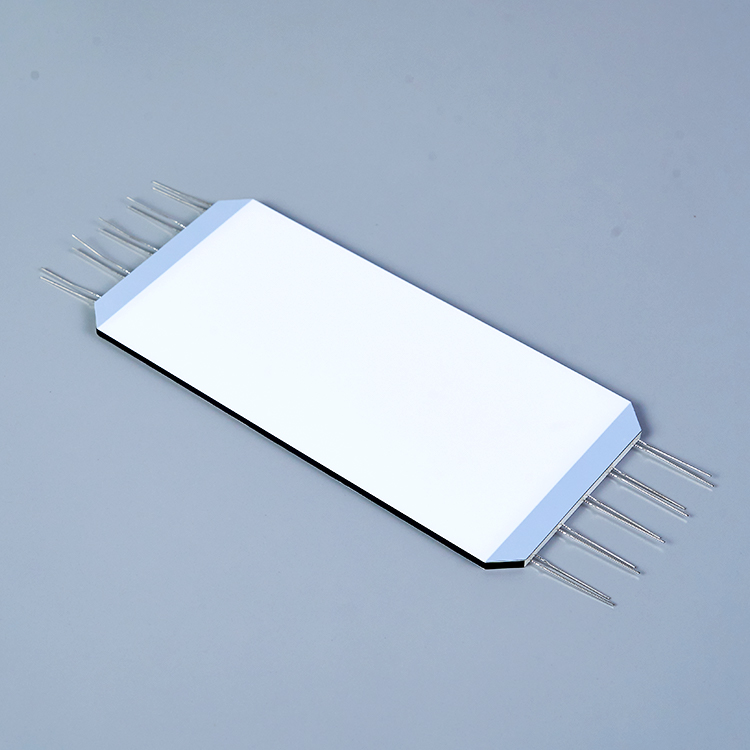
An edge-lit LED LCD backlight places light sources strategically around the screen border.
Mechanism: Engineers position LEDs directly at the display perimeter. They fire light inward using highly engineered light guide plates (LGP). The LGP utilizes micro-structures to bend light out toward the user.
Pros: This architecture enables ultra-thin device profiles. Mobile phones, sleek consumer monitors, and thin-client laptops rely heavily on this design. It generally offers lower power consumption for battery-operated hardware.
Cons: These modules remain susceptible to light bleed at screen edges. The LGP can warp slightly under thermal stress. You will also notice lower peak brightness compared to direct-lit alternatives.
Common Mistake: Failing to secure the LGP properly inside the bezel. Mechanical stress on the display edges will distort the light guide. This creates uneven bright spots visible during dark scenes.
Direct-lit designs change the physical layout and thermal dynamics entirely.
Mechanism: An LED array sits directly behind the LCD panel. Diffuser sheets blend the individual point sources into an even plane of light.
Pros: This design delivers superior brightness uniformity across the entire panel. It provides better local dimming capabilities for high-contrast visual applications. Medical imaging, outdoor kiosks, and automotive clusters benefit greatly here.
Cons: It noticeably increases overall module thickness. It also produces higher thermal output directly behind the liquid crystal layer. You will need robust heat dissipation mechanisms to protect the diodes.
Shortlisting requires a practical approach based on application. Default to edge-lit configurations for portable consumer devices. Battery-operated or space-constrained gadgets usually demand these thin profiles. Conversely, specify direct-lit structures for static monitors. High-visibility commercial displays need maximum uniform output. Rugged equipment benefits from the robust thermal characteristics of a rear-mounted array.
Table 1: Structural Comparison for Display Illumination
Feature | Edge-Lit Architecture | Direct-Lit Architecture |
|---|---|---|
Module Thickness | Ultra-thin (often <5mm) | Thicker (requires diffusion gap) |
Brightness Uniformity | Good, prone to edge bleeding | Excellent, highly uniform |
Power Consumption | Generally lower | Higher (more LEDs used) |
Thermal Management | Concentrated at the edges | Spread across the rear plane |
Ideal Applications | Tablets, thin laptops, consumer displays | Medical monitors, outdoor kiosks, industrial |
Aligning optical output with electrical limitations takes careful engineering planning. You must account for real-world environmental realities. Let us break down the critical specifications defining display performance.
Choosing a high brightness LCD backlight requires clear operational goals.
Evaluation Criteria: Determine your target luminance in nits (cd/m²). Standard indoor screens perform exceptionally well between 200 and 500 nits. Office monitors and consumer tablets fall into this category. However, outdoor or sunlight-readable displays require completely different specifications. They need 1000+ nits to remain legible under direct solar glare. Some marine applications push this requirement beyond 1500 nits.
Implementation Risk: Pushing high brightness exponentially increases your thermal load. You cannot ignore heat management. High drive currents raise the LED junction temperature. Failure to implement adequate heat sinking causes premature phosphor degradation. Diodes will shift color and lose luminosity rapidly. We strongly recommend conducting thermal chamber testing during the prototyping phase. Ensure your chassis design incorporates aluminum heat spreaders or thermal pads.
A white LCD backlight must match your panel's unique optical characteristics perfectly.
Evaluation Criteria: Review the Color Temperature (K) carefully before finalizing BOMs. Consumer devices often target a cooler 6500K for a crisp appearance. Check the Color Rendering Index (CRI) for accurate color reproduction. Medical diagnostic displays and aviation monitors demand strict CRI compliance above 90.
Trade-offs: Warmer white backlights often sacrifice raw lumen output. Achieving perfect white balance means losing some peak brightness. High brightness levels can also skew color saturation heavily. This happens if the LCD panel's color filters do not match the backlight's spectral output. You must test the display matrix and the illumination module together. Do not assume separate component specifications guarantee combined optical performance.
Best Practice: Ask your supplier for spectral power distribution (SPD) charts. Cross-reference these charts against your liquid crystal transmission curves. This ensures optimal color gamut coverage without driving the LEDs too hard.
Your LCD backlight requires precise electrical control for long-term stability.
Evaluation Criteria: Calculate total forward voltage requirements meticulously. Always specify constant current driving circuits over simpler alternatives. LED arrays behave like current-driven devices. They do not respond well to simple constant voltage supplies. You must regulate the exact amperage flowing through the diode string.
Implementation Risk: Many novice designers rely on basic resistor voltage drops. They avoid dedicated LED driver ICs to save immediate BOM costs. This decision causes flickering and uneven brightness over time. Performance drops significantly as the battery drains. Fluctuating ambient temperatures also destabilize resistor-based circuits. Thermal runaway can occur, permanently destroying the diodes. Always prioritize Pulse Width Modulation (PWM) or dedicated analog dimming controllers.
Balancing time-to-market against specialized hardware requirements remains challenging. You must decide whether to adapt existing parts or engineer new ones. Both paths offer distinct advantages depending on your production scale.
Standard units provide rapid deployment opportunities for conventional product shapes.
They work best for early proof-of-concept hardware builds.
They suit low-volume production runs perfectly.
You use them for standard form factors like standard 16:9 displays.
They eliminate upfront tooling costs entirely.
Assumption: You must design your chassis around existing display specifications. Power delivery must adapt to what the standard module dictates. You surrender mechanical control to the component supplier. If your space is highly constrained, standard parts might force unwanted chassis bulk.
Investing in a custom LCD backlight unlocks ultimate hardware flexibility.
Customization works best for non-standard aspect ratios like bar displays or circular dials.
It handles extreme environmental conditions effectively through specialized material selection.
It solves highly constrained power budgets through optimized LED string layouts.
It allows exact placement of mounting tabs and FPC connectors.
Evaluation Dimensions: Calculate non-recurring engineering (NRE) tooling costs upfront. Negotiate minimum order quantities (MOQ) early in the discussion. Map out prototyping lead times realistically. Custom light guide plates require precise optical simulation software. Tools like TracePro help engineers model light extraction patterns before cutting physical molds. This engineering phase adds several weeks to your timeline.
Success Criteria: A custom design should solve a specific mechanical bottleneck. It must resolve electrical issues standard modules cannot address. It prevents field failure in specialized applications. If a standard part meets 90% of your needs safely, avoid custom tooling. Choose custom engineering only when off-the-shelf limits your product's core functionality.
Transitioning from prototype selection to scalable mass production carries immense risk. You need a vendor capable of consistent output across thousands of units. Selecting an experienced LCD backlight manufacturer mitigates catastrophic production nightmares.
Do not judge a supplier solely on pricing. Evaluate their engineering infrastructure and quality control mechanisms thoroughly.
Industrial LCD Backlight Capabilities: Can they deliver a true industrial LCD backlight? Ask about extended temperature range testing. Industrial units must operate flawlessly from -30°C to +80°C. They must survive harsh vibration profiles and humidity swings. Consumer-grade components fail rapidly under these stresses.
Quality Control & Binning: Demand strict LED binning processes. Manufacturers sort LEDs by forward voltage, luminous flux, and color chromaticity. Binning ensures batch-to-batch color consistency. Ask them about MacAdam ellipses. A tighter MacAdam ellipse guarantees uniform brightness and color across thousands of production units.
Compliance & Certification: Request verification of RoHS and REACH compliance status. Check relevant ISO certifications for your intended market. Medical devices require ISO 13485 compliance. Automotive applications demand IATF 16949 certification. Do not skip this documentation review.
Request MTBF (Mean Time Between Failures) data immediately. Ask for environmental stress test reports. Demand sample sets from specific production bins. Perform your own accelerated life testing (ALT) in-house. Do all this before signing any binding vendor agreements. A reliable partner will provide transparent testing data willingly.
Common Mistake: Approving a golden prototype without verifying mass production tolerances. Always request a pilot run of 50 to 100 units. Check these units for LGP warping, solder joint integrity on the FPC, and color temperature variations.
Choosing display components involves a continuous process of technical compromise. You balance optical performance, physical footprint, and thermal management constantly. We recommend prioritizing your specific application environment first. Indoor consumer electronics differ vastly from outdoor industrial kiosks. Anchor your baseline specifications to these strict environmental realities.
Next, select a structural architecture fitting your chassis constraints. Edge-lit saves space, while direct-lit maximizes uniformity. Finally, consult your electrical engineering teams to finalize strict voltage limits and current regulation strategies. Request technical datasheets and physical validation samples from shortlisted manufacturers. Thorough early testing prevents expensive downstream redesigns. Make decisions based on measured data, thermal realities, and proven component reliability.
A: LED backlights degrade naturally, but accelerated dimming is typically caused by overdriving the LEDs beyond their rated current or failing to dissipate heat effectively. Degradation of the light guide plate (LGP) can also reduce perceived brightness.
A: Extreme brightness can wash out the display if it exceeds the blocking capability of the LCD matrix. This lowers the contrast ratio and shifts the perceived color gamut. Accurate color requires matching the backlight intensity to the panel's specifications.
A: LEDs are current-driven devices. Constant current drivers ensure uniform brightness and prevent thermal runaway as the LED warms up. This makes them strictly preferable over constant voltage supplies for reliable, long-term backlight operation.


