English 


 |


| Quantity: | |||||||||
|---|---|---|---|---|---|---|---|---|---|
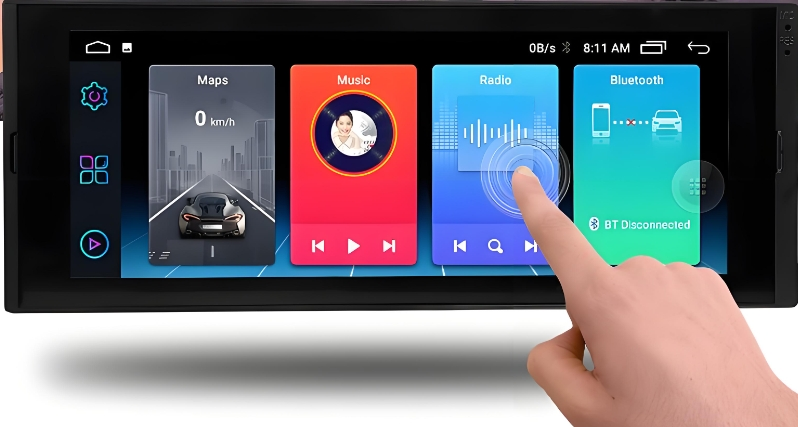
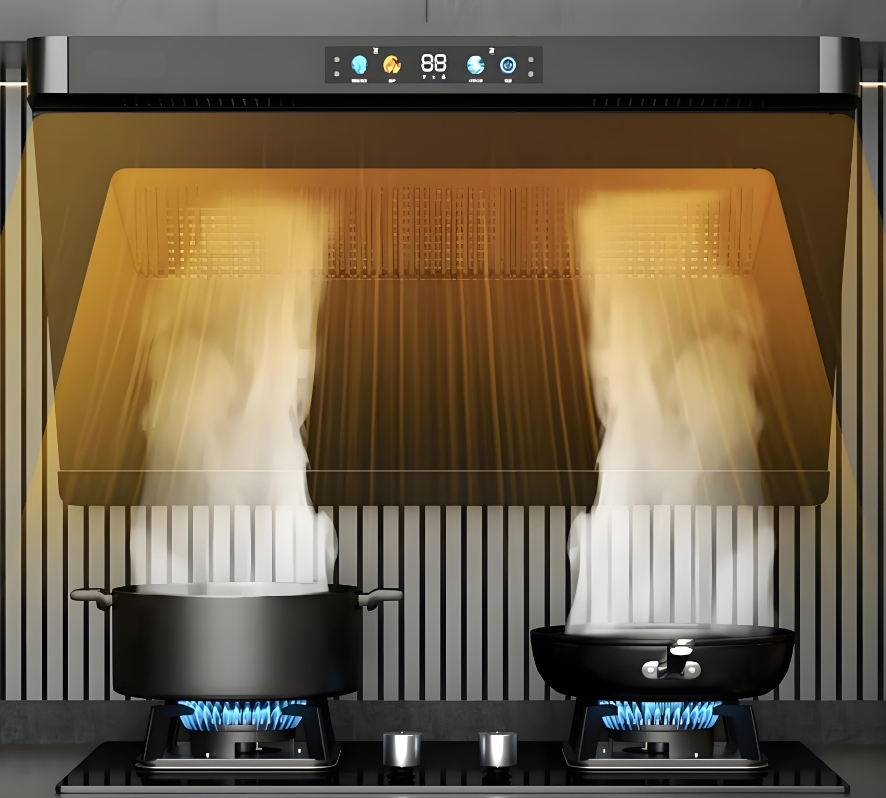
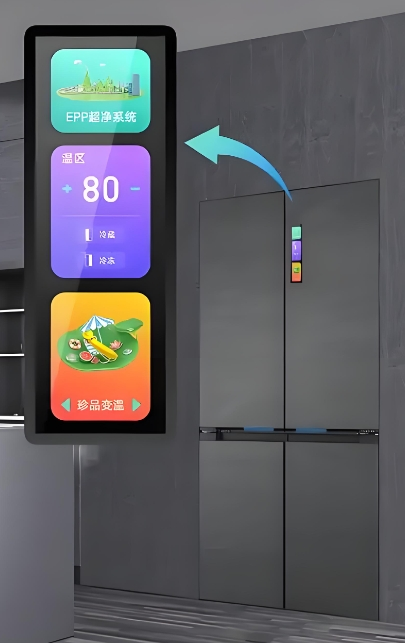
| Display modules find extensive application across multiple sectors: - Automotive applications (vehicle instrument panels, motorhome intelligent control screens) - Industrial applications (production line monitoring, intelligent warehouse management terminals, industrial equipment control panels) - Portable medical and health devices (patient monitors, queue management screens) - Smart home applications (central control screens, smart refrigerators, smart range hoods). | |||||||||
Selecting industrial-grade LCD glass offers significant cost advantages and proven technical maturity, tailored to application scenarios and client requirements.
The 280×1424 resolution achieves 211 PPI on a 6.9-inch display, delivering refined visuals with sharp text edges and smooth, jagged-free graphics. This resolution is particularly suited for displaying combinations of multiple data points and icons, offering 60% improved readability compared to lower-resolution modules of the same size.
The 280×1424 ultra-wide aspect ratio (approximately 1:5.1) increases vertical information capacity by 200% compared to traditional square screens. This enables multi-module data partitioning (e.g., "speed + navigation + auxiliary information" tri-partitioning in automotive applications), preventing information overlap and compression. It adapts to scenario-based interaction requirements, enhancing readability.
350 nits brightness + 1200:1 contrast ratio adapts to diverse indoor/outdoor natural lighting conditions, delivering sharp contrast and enhanced shadow detail. This ensures clear visibility of critical information (e.g., industrial equipment fault codes, night-time in-vehicle navigation interfaces) in low-light environments, preventing misreading and meeting stringent "information accuracy" requirements in medical and industrial applications.
IPS full-view technology ensures stable colour, contrast, and clarity from any viewing angle, eliminating colour shift or dimming issues. This resolves the industry challenge of "edge viewing angle colour deviation" in ultra-wide screens – maintaining consistent colour and brightness without distortion or decay when viewed by multiple users, such as between driver and passenger in automotive settings or during collaborative viewing in industrial environments.
Supports a wide voltage range of 2.5V to 3.6V, compatible with diverse power solutions including automotive 12V to DC and industrial 24V to DC conversions, eliminating the need for additional voltage conversion modules. The 8-LED backlight circuit (If=60mA, Vf=12V) maintains 350TYP brightness while controlling energy consumption, achieving 25% greater energy efficiency than high-power modules of equivalent size.
The driver interface employs MIPI architecture with transmission speeds up to 1.5Gbps – several times faster than conventional RGB interfaces. This ensures seamless synchronisation and refresh rates for multi-module ultra-wide displays, eliminating stuttering. It is ideally suited for demanding applications requiring real-time data integrity, such as in-vehicle navigation systems and industrial monitoring, delivering exceptional market competitiveness.
 | | |  |
The market for "6-7-inch ultra-wide elongated display modules" housing 6.9-inch elongated colour screens continues to experience explosive demand, driven by applications in high-growth sectors such as automotive and industrial. According to the 2024 White Paper on the Small and Medium-sized Display Module Industry:
• Automotive electronics sector: Global penetration of 6-7-inch ultra-wide elongated displays in vehicle instrument clusters and secondary centre console screens reached 38%, with shipments exceeding 8 million units in 2023. Among these, 6.9-inch products accounted for 45% due to their "size compatibility + ultra-wide resolution", achieving a 55% annual growth rate.
Industrial control sector: The market size for 6-7-inch ultra-wide screens in industrial control panels and monitoring displays reached RMB 4.2 billion in 2023, growing at 48% annually. MIPI interface products, favoured for their "high-speed transmission", became the preferred choice for mid-to-high-end industrial equipment, commanding over 75% market preference;
Smart Home Sector: Demand for 6-7-inch ultra-wide elongated screens in smart control centres and large home appliance panels grew by 40% annually. Products with 1200:1 high contrast ratios commanded a 20%-30% premium over standard contrast models, meeting user demands for "high-definition interaction" upgrades.
Third-party research firm Omdia forecasts that by 2025, the global market for 6-7-inch ultra-wide IPS display modules will exceed US$18 billion. Automotive electronics and industrial control applications will contribute over 90% of this growth, with the 6.9-inch variant emerging as the segment's "core size".
Upon completion of product manufacturing, the display module undergoes testing via the professional optical testing equipment BM-7 to evaluate optical performance metrics including brightness, colour, contrast, and viewing angle, ensuring all specifications meet design requirements. The display module is subjected to reliability testing under industrial control specifications encompassing high temperature, low temperature, and high humidity conditions, simulating diverse operational scenarios encountered in practical use. This ensures both environmental adaptability and reliability of the product meet specified standards.
This display module is extensively utilised across multiple sectors:
automotive applications (vehicle instrument panels, motorhome intelligent control screens);
industrial settings (production line monitoring, smart warehouse management terminals, industrial equipment control panels);
portable medical and health devices (patient monitors, queue management displays);
and smart home solutions (central control screens, smart refrigerators, smart range hoods).