
English 


 |


| Quantity: | |||||||||
|---|---|---|---|---|---|---|---|---|---|
2026-02-25
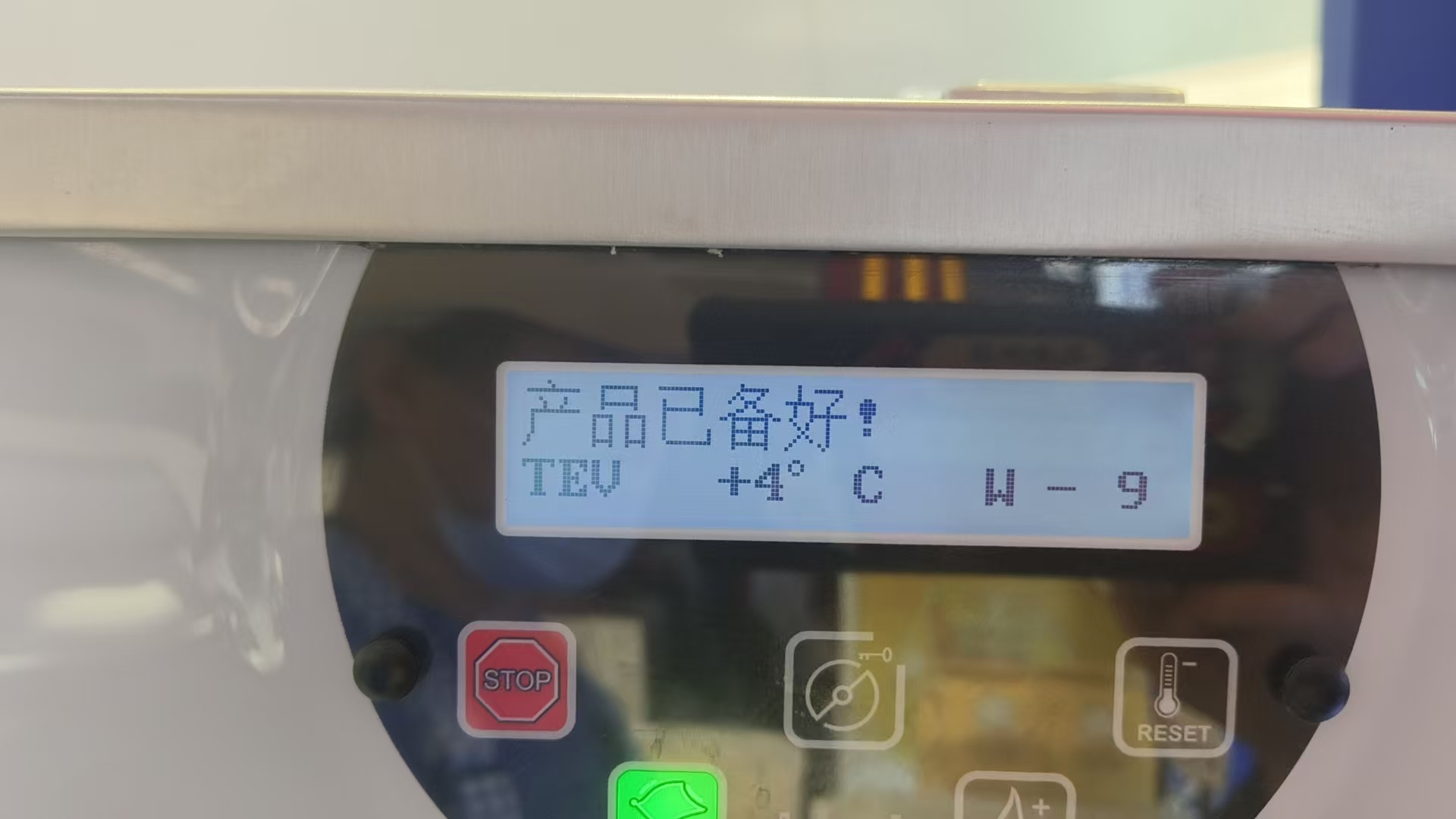
The core characteristics of character-type dot matrix monochrome displays (Character LCD, Char-LCD) revolve around "character-based display", while also incorporating hardware and functional features tailored to specific scenarios. These can be clearly organised across four dimensions: display characteristics, hardware and driver features, performance attributes, and application adaptability. Details are as follows:
I. Display Characteristics: Functionality Centred on "Predefined Characters"
This constitutes the fundamental distinction between character dot matrix displays and graphical or colour screens, with all display capabilities designed around the "character unit":
1). Fixed display units: The screen comprises multiple "character display positions" (e.g., the common 1602 screen features "16 columns × 2 rows", while the 2004 screen has "20 columns × 4 rows"). Each character position corresponds to a fixed-size dot matrix area (typically 5×8 or 5×11 dots; e.g., 5×8 denotes each character comprising 5 columns and 8 rows of pixels), capable only of displaying characters from a predefined character library within a single character position.
2). High character library dependency: Unable to display custom graphics or arbitrary pixel combinations, supporting only built-in character sets ; displaying Chinese characters or special symbols requires integrating additional extended character sets (e.g., GB2312 character set), with each Chinese character occupying two standard character positions (as Chinese dot matrices typically measure 16×16, necessitating the combination of two 5×8/5×11 dot matrix units).
3). Monochrome display with adjustable contrast: Supports only black and white colours (typically "black background with white text" or "white background with black text"), lacking grayscale or colour display capability. Screen contrast is usually adjustable via hardware potentiometers or software commands (e.g., adjusting backlight brightness or pixel contrast) to adapt to varying lighting conditions (such as enhancing contrast under strong light to ensure readability).
II. Hardware and Driver Characteristics: Simple Structure, Easy Integration
The hardware design and driver logic of character dot matrix displays are significantly less complex than those of graphic displays, making them more suitable for resource-constrained embedded scenarios:
1). Streamlined hardware architecture: The display core comprises a "Character Generator ROM (CGROM, storing a predefined character library)", "Data Display Register (DDRAM, storing the ASCII codes of characters to be displayed)", and "dot matrix driver circuitry", without complex pixel control modules; External interfaces typically employ parallel connections (e.g., 8-bit data bus + 3-bit control bus, totalling 11 pins) or simplified serial interfaces (e.g., I²C interface requiring only 2 pins), enabling straightforward wiring and minimal I/O port consumption on host devices (such as microcontrollers).
2). Simplified drive logic: The driver need not control individual pixels. It merely requires writing the ASCII code for a character to the DDRAM via commands (e.g., writing "0x30" displays the digit "0", writing "0x41" displays the letter "A"). The character generator automatically retrieves the corresponding dot matrix data and drives the display. The driver code is minimal (typically requiring only dozens of basic instructions), eliminating the need for complex graphical algorithms (such as drawing or refreshing). This results in low computational demands on the host device (e.g., an 8-bit 51 microcontroller can easily drive it).
3). Fixed size and form factor:
4). Common dimensions are defined by "number of character rows and columns" (rather than physical size), with physical dimensions typically compact (e.g., 1602 display approx. 80mm × 36mm, 2004 display approx. 110mm × 60mm), predominantly rectangular small screens; no flexible or irregular shapes, supporting only fixed planar display, suitable for panel mounting in small devices (e.g., instrument panels, home appliance control areas).
 |  |  |
|
III. Performance Characteristics: Low Power Consumption, High Reliability, Suitable for Special Environments
While character dot matrix displays do not boast outstanding performance metrics, they offer significant advantages in "stability" and "power consumption", aligning with the requirements of industrial, medical, and similar scenarios:
1) . Low-power operation: The display consumes minimal power without backlighting (typically only a few mA; e.g., 1602 displays draw approximately 2–5 mA during static display). Even with backlighting (e.g., LED backlight), total power consumption remains under 10 mA (significantly lower than the tens to hundreds of mA required by TFT-LCDs). Supports "sleep mode" (deactivating certain circuits via software commands), reducing power consumption to below 1mA during sleep, making it suitable for battery-powered portable devices (e.g., handheld detectors, electronic alarm clocks).
2). High reliability and extended lifespan: Eliminates liquid crystal leakage risks (some early models utilised structurally stable TN-type liquid crystals). Screen lifespan exceeds tens of thousands of hours without backlighting (backlight lifespan depends on LEDs, typically reaching 10,000–30,000 hours); High resistance to interference, excellent adaptability to electromagnetic radiation (e.g., industrial equipment electromagnetic interference) and temperature fluctuations (typical operating range: -20°C to 70°C; industrial-grade models extend to -40°C to 85°C), minimising screen distortion or blackout faults. Suitable for prolonged continuous operation (e.g., industrial equipment monitoring displays).
3) . Slower response time (not a defect, context-dependent): LCD response times typically range from tens to hundreds of milliseconds (significantly slower than TFT-LCD's millisecond response). However, as these displays primarily show static or slowly changing characters (e.g., temperature, time, parameters) rather than requiring rapid dynamic display (e.g., video, animation), the slower response time has negligible impact in their intended applications. Conversely, the lower drive frequency further reduces power consumption.
IV. Application Adaptability Features: Low Cost, High Adaptability, Focusing on "Concise Information"
The characteristics of character-type dot matrix displays define their application boundaries, with core adaptability for scenarios requiring "text/numeric display only":
1). Significant cost advantage: Simple hardware structure and drive logic result in low production costs (e.g., 1602 displays typically cost only a few to tens of yuan each, far below the tens of yuan for graphic displays). This makes them suitable for mass deployment in low-cost devices (e.g., home appliances, small instruments, toys), substantially reducing overall equipment costs.
2). Information display is "redundancy-free": Supporting only character display forces information presentation to be "concise"—eliminating the need to process complex graphics, icons, or interactive interfaces. It conveys only core data (e.g., "Temperature: 25°C", "Battery: 80%", "Error Code: ERR01"), avoiding information overload. This suits scenarios requiring "rapid access to critical information" (e.g., medical instruments, industrial monitoring).
3). High Compatibility: Standardised driver protocols (e.g., adhering to the HD44780 controller protocol, compatible with most character displays) enable direct interchangeability between screens of identical specifications (e.g., 1602 displays) across brands and models without driver modifications; Compatible with the vast majority of embedded host platforms (e.g., 51 microcontrollers, STM32, Arduino, Raspberry Pi), offering significantly higher compatibility than customised graphic displays.
This character-type dot matrix monochrome display module finds extensive application in:
Industrial Control and Automation
I. Industrial Control and Automation
Industrial environments demand exceptional stability, interference resistance, and low power consumption from display equipment. Character-type dot matrix monochrome screens, with their simple structure and low failure rate, serve as a core solution in such settings, primarily for:
1). Equipment Status Monitoring: Operational panels for PLCs (Programmable Logic Controllers), frequency converters, and sensors display critical parameters such as "Run/Stop", "Temperature: 25°C", and "Pressure: 0.8MPa", enabling engineers to monitor equipment conditions in real time.
2). Industrial instrumentation displays: Screens on measuring instruments such as multimeters, oscilloscopes, and signal generators, showing measured values (e.g., "12.34V", "50Hz"), ranges ("DC 20V"), or error codes ("ERR 01"). These require no complex graphics, only clear data presentation.
3). Production process indicators: Displays on assembly line controllers or sorting equipment operation screens showing process information such as "Process: 1/5", "Output: 120 units", "Passed: 118 units", guiding workers or equipment to execute subsequent operations.
|
|
II. Embedded Systems and Smart Hardware
Embedded devices (such as those driven by microcontrollers or ARM development boards) typically operate with constrained resources (computational power, power consumption, cost). Character dot matrix displays, with their low drive complexity and compact size, are ideally suited to such scenarios. Typical applications include:
1). Compact controllers/modules: e.g., smart home thermostats (displaying "Target 26°C/Current 24°C", "Mode: Auto") or lighting controllers (displaying "Brightness: 70%", "Colour Temperature: 4000K"); IoT node devices (e.g., soil moisture monitors displaying "Humidity: 65%", "Battery: 3.7V").
2). Development boards / debugging tools: such as display modules for 51 microcontrollers or STM32 development boards (most commonly 1602 or 2004 displays), used during debugging to show variable values and programme status (e.g., "LED ON", "UART OK"), aiding developers in rapid issue identification.
3). Portable detection devices: such as handheld formaldehyde detectors or PM2.5 monitors displaying results like "Concentration: 0.03mg/m³" or "Level: Excellent". These compact devices demand high battery endurance, where character displays offer significant low-power advantages.
|
|
III. Consumer Electronics and Everyday Appliances
In consumer scenarios, many devices require only the "display of basic information" without complex visuals. Character-based dot-matrix monochrome screens, favoured for their low cost and ease of integration, are widely employed in:
1). Home appliance control panels: such as older microwave ovens (displaying "Time: 2:00", "Power: High"), washing machines (displaying "Programme: Quick Wash", "Remaining: 15 min"), and rice cookers (displaying "Cooking / Keep Warm", "Countdown: 20 min") — these devices have fixed functions where character displays adequately meet user operation needs while reducing overall unit costs.
2). Small electronic devices: such as digital alarm clocks (displaying "10:05", "Date: 2024-10-15", "Alarm: ON"), electronic scales (displaying "Weight: 65.2kg", "Unit: kg"), calculators (displaying input numbers and results, e.g. "123+456=579").
3). Automotive auxiliary displays: Supplementary instrument clusters in certain older vehicle models, trip computers (displaying "Speed: 60km/h", "Fuel level: 1/2", "Mileage: 12500km"), or tyre pressure monitoring systems (displaying "Front left: 2.3bar", "Rear right: 2.2bar") require stable operation under vibration and temperature variations, making character displays a reliable solution.
IV. Medical and Laboratory Equipment
Medical settings demand stringent accuracy and stability in display performance. Character dot-matrix monochrome screens, renowned for their "zero display deviation and easy readability", are employed in:
1). Basic medical instruments: such as electronic thermometers (displaying "Body Temperature: 36.5°C", "Measurement Complete"), blood pressure monitors (displaying "Systolic: 120mmHg / Diastolic: 80mmHg", " Heart rate: 75 bpm"), enabling medical staff or users to swiftly access critical health metrics.
2). Laboratory auxiliary equipment: such as centrifuges (displaying "Speed: 5000rpm", "Time: 10min") and incubators (displaying "Temperature: 37℃", "Humidity: 50%"). These require only operational parameter displays without graphical interfaces, simplifying operational complexity.
V. Commercial and Office Support Equipment
Commercial settings prioritise "efficient, low-cost information transmission". Character displays are used for:
1). POS terminals and cash registers: Transaction screens on legacy cash registers display "Amount: 99.00 yuan", "Received: 100.00 yuan", " Change: £1.00", or card reader status prompts ("Card Swiped Successfully", "Please Try Again").
2). Attendance and Access Control Systems: Such as time clocks (displaying "Employee ID: 001", "Time: 09:00", "Clocked In Successfully") or access controllers (displaying "Authorised Access", "Incorrect Password"), where concise information requires no complex interaction.
3). Small Information Terminals: Such as lift floor displays (showing "Current: 3F", "Up / Down") or car park payment terminals (displaying "Parking Fee: 15 yuan", "Payment Successful"), requiring only core instructions or data transmission.


